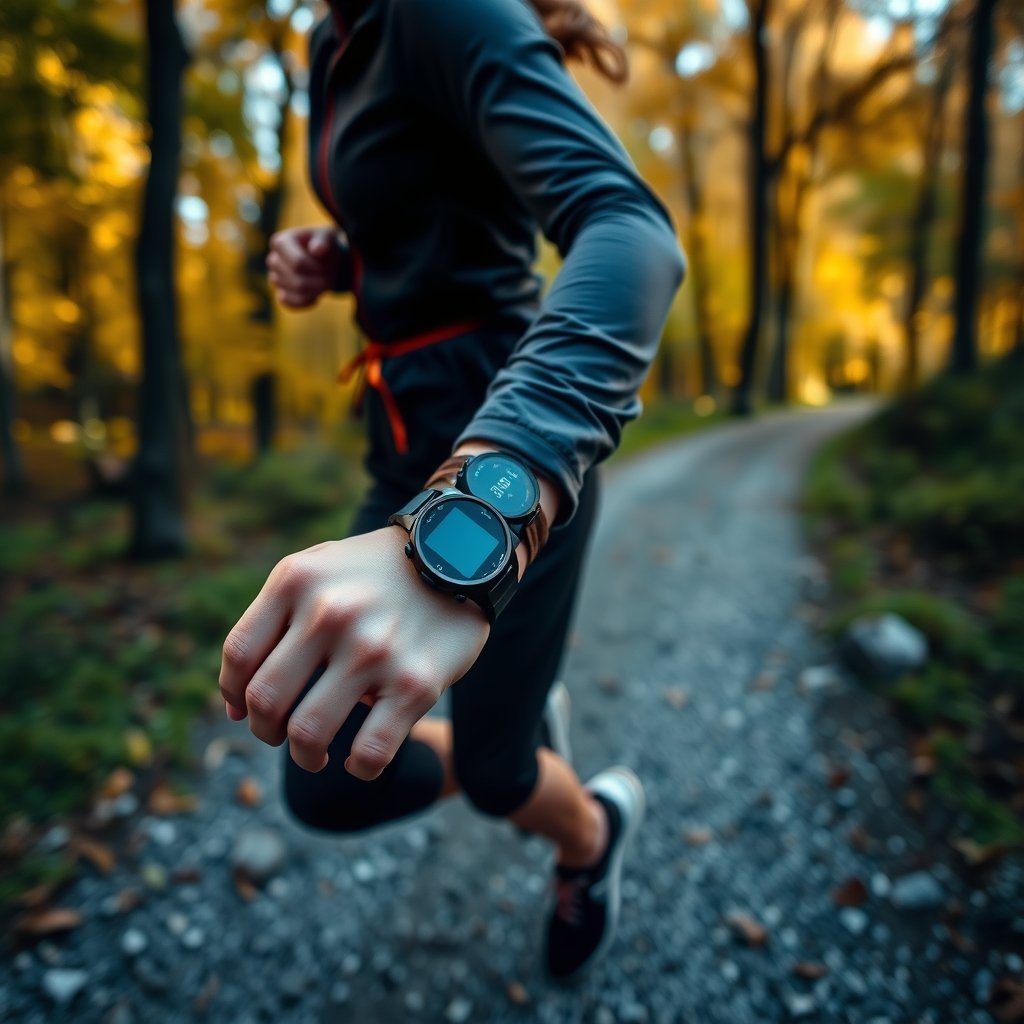
A good sports smartwatch has built-in GPS, tracks heart rate reliably, lasts long enough between charges and syncs smoothly with the app you already use. An everyday smartwatch is mostly a phone on your wrist; a sports watch is first and foremost a training tool. Below you will find the features that really matter, advice for individual sports and a separate section on smartwatches for children.
Sports watch or smartwatch: what is the difference?
The line between the two blurs every year, but the focus stays different. A classic smartwatch (such as the Apple Watch or Samsung Galaxy Watch) has a large display, apps, payments and notifications, and the battery usually lasts a day or a few days. A sports watch (Garmin, Polar, Suunto, Coros and similar brands) prioritises accurate GPS, long battery life, a rugged case and detailed training analysis.
In between sit cheaper fitness bands and watches that count steps and track sleep and heart rate, but do not always have their own GPS. For someone who walks and runs now and then, they can be perfectly adequate. Compatibility matters too: the Apple Watch works only with an iPhone, while most sports brands work with both iPhone and Android.
The features that really matter
Built-in GPS
Without its own GPS, a watch estimates distance and pace from arm movement or relies on a phone you have to carry. If you run, cycle or hike, built-in GPS is close to essential. Accuracy drops between tall buildings, in dense forest and in deep valleys, so small deviations are not a fault of the watch but a limit of the satellite signal.
Heart rate tracking
An optical wrist sensor is reliable enough for steady running, walking and cycling. During intervals, weightlifting and sports with a lot of wrist movement, table tennis included, readings are often less accurate. If you train by heart rate zones, choose a watch that pairs with a chest strap. Use the data to follow trends rather than chase a single number.
Battery life
Two figures count for a sports watch: how many days it lasts in normal mode and how many hours with GPS running continuously. For a weekend hike or a long bike ride, the second figure matters more. Watches with AMOLED displays look better but usually use more power than those with MIP displays, which are easy to read in direct sunlight.
Water resistance
The ATM rating tells you how much pressure the watch withstands in laboratory conditions, not how deep you can dive with it.
| Rating | Suitable for | Not suitable for |
|---|---|---|
| 3 ATM | rain, splashes, hand washing | swimming |
| 5 ATM | swimming in a pool and shallow water | diving, jumping into water |
| 10 ATM | swimming, snorkelling | scuba diving |
After swimming in the sea or a chlorinated pool, rinse the watch with clean water and wipe it dry. Soap, sunscreen and oils are not kind to the seals.
Which watch for which sport
- Running: built-in GPS, real-time pace, interval workouts and a light case.
- Cycling: long battery life with GPS, pairing with cadence and power sensors and, ideally, map navigation.
- Swimming: at least 5 ATM, plus pool (lap counting) and open-water modes.
- Hiking and mountains: barometric altimeter, maps, back-to-start navigation and a battery that lasts several days.
- Indoor sports and table tennis: GPS is not needed; comfort, heart rate and session duration tracking and a good overview of weekly load matter more.
The best sports watch is the one you will actually wear
When looking for the best sports watch, do not start with a list of the most expensive models. Start with what you do and how often. Before you buy, check:
- whether the watch has built-in GPS if you train outdoors;
- how many hours the battery lasts with GPS on, not just in smartwatch mode;
- whether the app is clear and whether key features are free or require a subscription;
- whether the watch is comfortable at night if you want sleep tracking;
- whether it works with your phone and the services you already use (Strava, Komoot and so on).
If you train two or three times a week, a mid-range watch will serve you just as well as a flagship. Last year’s model in the same series is often much cheaper, and for recreational athletes the differences are small.
Smartwatches for children
A kids’ watch is rarely about training. Parents usually look for a watch with a SIM card, GPS location, an SOS button and calls to a few saved numbers. In Slovenian online shops, such kids’ smartwatches start at around €40, while 4G models cost more than €110. Add the monthly cost of a mobile plan on top.
Before buying, pay attention to a few things:
- Privacy and security: choose a well-known brand that clearly states where location data is stored. In 2017, the German regulator banned the sale of children’s watches with a hidden function for listening in on their surroundings, and consumer organisations have warned about weak data protection in some models.
- School rules: check the school’s rules, as many schools do not allow phones or calling devices during lessons.
- Durability and battery: a kids’ watch has to survive play, rain and forgotten charging. Battery life on SIM models is often only one to three days.
- Movement over screens: a watch that counts steps and rewards activity motivates a child more than games on the wrist.
For older children who already train regularly, a simple sports watch without a SIM card is often the better choice: there are no extra costs and it is less distracting.
Frequently asked questions
Do I need a sports watch with GPS if I only run on a treadmill?
Not necessarily. On a treadmill, GPS does not help much and the watch estimates distance from movement. If you sometimes run outdoors as well, built-in GPS is worth paying extra for.
How accurately does a smartwatch measure heart rate?
For steady workouts, wrist readings are good enough to track progress. For intervals, gym work and fast arm movements, a chest strap paired with the watch is more accurate.
Can I swim with a 5 ATM smartwatch?
Yes, 5 ATM means the watch is suitable for swimming in a pool and shallow water. It is not suitable for diving, and you should rinse it with clean water after swimming in the sea.
At what age does a smartwatch for kids make sense?
A watch with a SIM card and location tracking is mostly aimed at children who walk to school on their own but do not have a phone yet. The decision depends on the child, the route and the school rules.