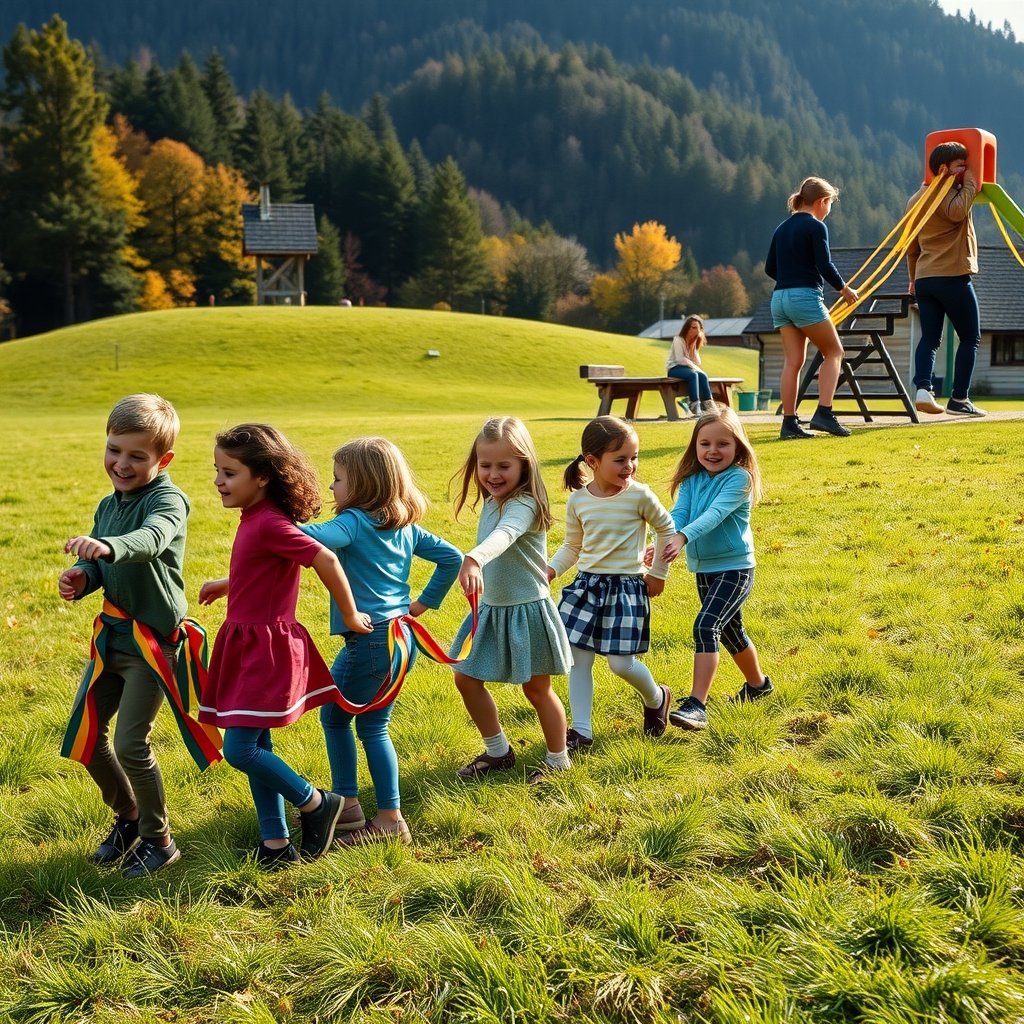
The most fun group games for kids have simple rules, lots of running and short rounds in which nobody sits out for long: freeze tag, dragon’s tail, dodgeball, cops and robbers or What’s the time, Mr Wolf? Below is a selection of 12 tried-and-tested games for the playground, a meadow, the gym and the living room, with instructions, suitable ages and tips on running a game so the whole group enjoys it.
Why group games are more than just fun
In Slovenian kindergartens and schools they are called elementary games: group games built on natural movements such as walking, running, crawling and jumping. They are the forerunners of real sports, because children develop coordination, balance, speed and reaction time without noticing they are training.
The social side matters just as much. Through play, children learn to follow rules, work as a team, help a teammate and accept losing. Outdoor games also help with daily activity: World Health Organization guidelines say children and teenagers aged 5 to 17 should get at least 60 minutes of moderate to vigorous physical activity every day. Half an hour of tag after school is a great start.
Chasing and running games
These are the most popular outdoor games for kids because children get them within seconds. All you need is a defined space without obstacles.

- Freeze tag – one child is “it”. Anyone tagged freezes with legs apart and waits until a teammate frees them by crawling between their legs. With a bigger group, choose two or three chasers.
- Dragon’s tail – the children form a line, each holding the one in front by the hips. The first child is the dragon’s head and tries to catch the last one, who has a scarf or ribbon tucked into their waistband. Once caught, the tail becomes the new head. The game teaches cooperation, because the dragon must not break apart.
- Cops and robbers – two or three cops wait while the robbers hide, then search for them, chase them and take them to jail. A teammate can free a jailed robber with a high five. The game ends when everyone is in jail.
- Hide and seek – the seeker closes their eyes and counts while the others hide. When the seeker spots someone, they race back to base and call out that player’s name. Anyone who gets to base first is safe.
Ball games and relays
From around age 7, team games are the most exciting, because the goal is shared and everyone can contribute.
- Dodgeball (two-captain version) – two equal teams, each with a captain standing behind the opposite end of the court. Teams pass the ball and try to hit an opponent. A player who is hit joins their captain outside and keeps throwing from there. Use a soft foam ball for younger kids.
- Steal the land – draw a chalk circle divided into equal slices; each player gets their own “country”. The player whose country is called catches the ball and tries to hit one of the others as they scatter. A hit lets them take a slice of that player’s land. Whoever ends up with the most land wins.
- Obstacle relay – two or three teams, a course with cones to weave through, a hoop to jump into and a ball to carry. Relays work well for mixed groups, because speed is not everything: skill counts too.
Calmer and educational games for kids
When space is tight, it is raining or the group is tired, games with less running and more thinking come in handy. Many double as educational games for kids, practising counting, words, left and right, and concentration.
- What’s the time, Mr Wolf? – the children stand on a line with the “wolf” a few metres away. When asked, the wolf answers with a number and type of steps, for example “three giant steps forward”. The first to touch the wolf becomes the next wolf. Younger children practise counting along the way.
- Blind man’s buff – a blindfolded child in the middle asks where the others are; they answer and dodge. The area must be free of obstacles and sharp edges.
- Mirror – in pairs, one child makes slow movements and the other copies them like a mirror. Swap after a minute. Ideal for calming down after wilder games.
- Name and move – in a circle, each child says their name and adds a movement, and the group repeats both. Perfect when children meet for the first time, at a birthday party or a camp.
Games for 7-year-olds and up: try round-the-table ping pong
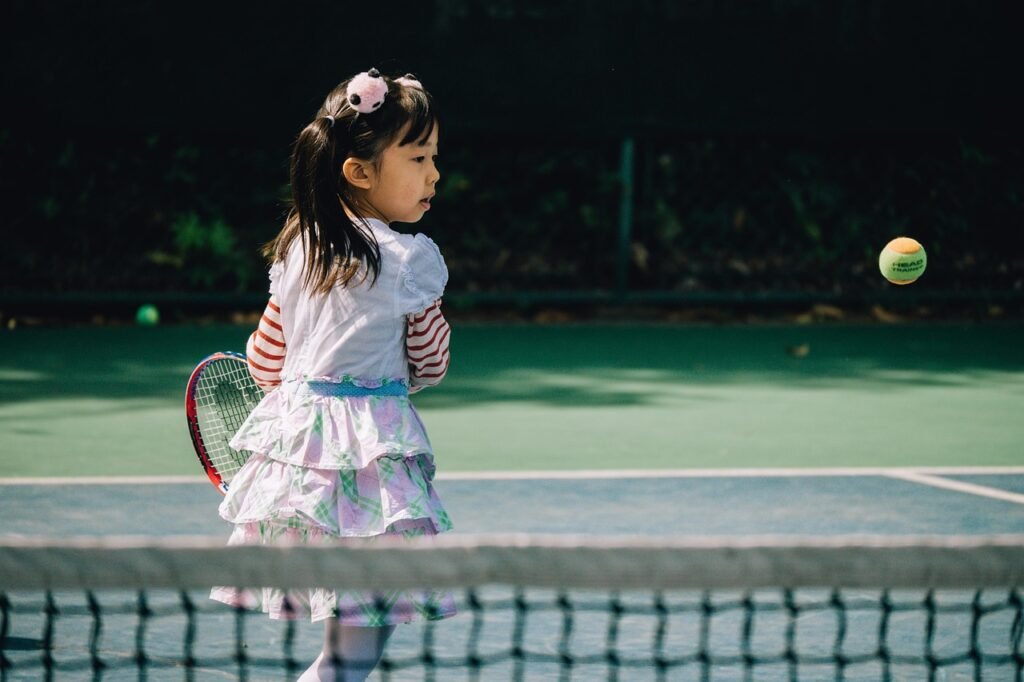
By seven, children understand more complex rules, teams and scoring, and they love to compete. One of the most fun group games with a sporty twist is round-the-table ping pong (also called round the world). Children line up at both ends of a table tennis table; each hits the ball once and runs to the other end. Miss and you are out; when two are left, they play a final. The game teaches the stroke, footwork around the table and waiting your turn, and up to ten children can play at once.
| Game | Age | Number of children | Equipment |
|---|---|---|---|
| Freeze tag | 4+ | 6 or more | none |
| Dragon’s tail | 5+ | 6–12 | scarf or ribbon |
| Dodgeball | 7+ | 10 or more | soft ball |
| Steal the land | 7+ | 4–8 | ball, chalk |
| What’s the time, Mr Wolf? | 4+ | 4 or more | none |
| Round-the-table ping pong | 7+ | 5–12 | table, bats, ball |
How to run a game so everyone has fun
The same game can be the highlight of the day or end in tears after five minutes. The difference is almost always in the organisation.
- Explain the rules in one minute and play a practice round. Add extra rules only once the basics are working.
- Pick the teams yourself rather than letting two captains choose, so nobody is picked last. A quick way is counting off “one, two, one, two”.
- Keep elimination short. A child who is out should come back after one round or get a job, such as helping the captain.
- Rotate roles – chaser, seeker, captain – so everyone gets a turn.
- Think about safety: level ground without obstacles, proper shoes, soft balls and clear boundaries, and always an adult nearby with younger children.
- Stop while it is still fun, before the kids get bored, and follow a wild game with a calm one such as mirror.
Frequently asked questions
Which group games work for a birthday party?
At a party, games that need little space and that anyone can join work best: name and move to start, What’s the time, Mr Wolf?, dragon’s tail and relays with a balloon or an egg and spoon.
Which games can we play indoors?
Mirror, name and move, blind man’s buff in a cleared room and charades, where children act out animals or jobs and the others guess.
What if my child is a sore loser?
Choose games with short rounds and quick returns to play, praise effort and teamwork rather than just wins, and now and then play cooperative games with no winner, such as dragon’s tail.
How many children do you need for a group game?
Most games work with as few as four children, while team ball games such as dodgeball are most fun with ten or more players.